
In the military, we don’t just read the manual and call it a day. We run “Field Training Exercises” (FTX). We go out into the dirt, simulate the stress, and practice the movements until they become muscle memory. You can have the best intelligence in the world, but if you freeze when you’re actually “outside the wire,” that intelligence is useless.
Today, we are taking the “Paper Audit” into a simulated field environment. We are going to walk through three specific practice conversations. These aren’t scripts for a debate; they are drills for a dialogue. We are practicing how to keep the focus on the Surah 4:82 Test when the conversation starts to drift.
The Objective
Every practice conversation starts with the same objective: Evaluating the Quran’s internal claim of consistency from Surah An-Nisa 4:82.
“Then do they not reflect upon the Qur’an? If it had been from [any] other than Allah, they would have found within it much contradiction.”
Our mission is to help our friend compare the “Confirmation” (the Quran) with the “Blueprint” (the Torah). If the two don’t match, we aren’t “attacking”—we are simply performing the audit the Quran itself requested.
Scenario 1: Chronological Collapse (Mary vs. Miriam)
The Setup: You are having tea with a friend. They mention how much they love Mary (Maryam) and how the Quran honors her by naming a whole chapter after her.
Friend: “Yes, she is from a very noble, prophetic lineage.”
You: “That’s where the audit gets tricky. In the original ‘Blueprint’—the Torah—the literal sister of Aaron and daughter of Amram is Miriam, who lived 1,500 years before Mary. If the Quran is a divine ‘confirmation,’ why does it bridge a 1,500-year gap in her genealogy? Under the Surah 4:82 Test, wouldn’t mixing up two people separated by fifteen centuries count as a contradiction?”
You’ve moved from a “nice story” to a “data point.” You aren’t arguing about Mary’s character; you are auditing the chronological accuracy of the text.
Scenario 2: The Mixed Story (Saul vs. Gideon)
The Setup: Your friend mentions how the Quran gives better details about the kings and prophets than the Bible does.
Friend: “Right, it shows how Allah tests the believers.”
You: “True, but when we look at the ‘Blueprint’ in the Book of Judges, that specific ‘River Test’ was the signature of Gideon, who lived long before Saul. Saul’s actual test involved a fasting oath. It looks like the ‘Confirmation’ spliced Gideon’s story into Saul’s life. If the logs don’t match the historical signatures, how does it pass the Surah 4:82 Test?”
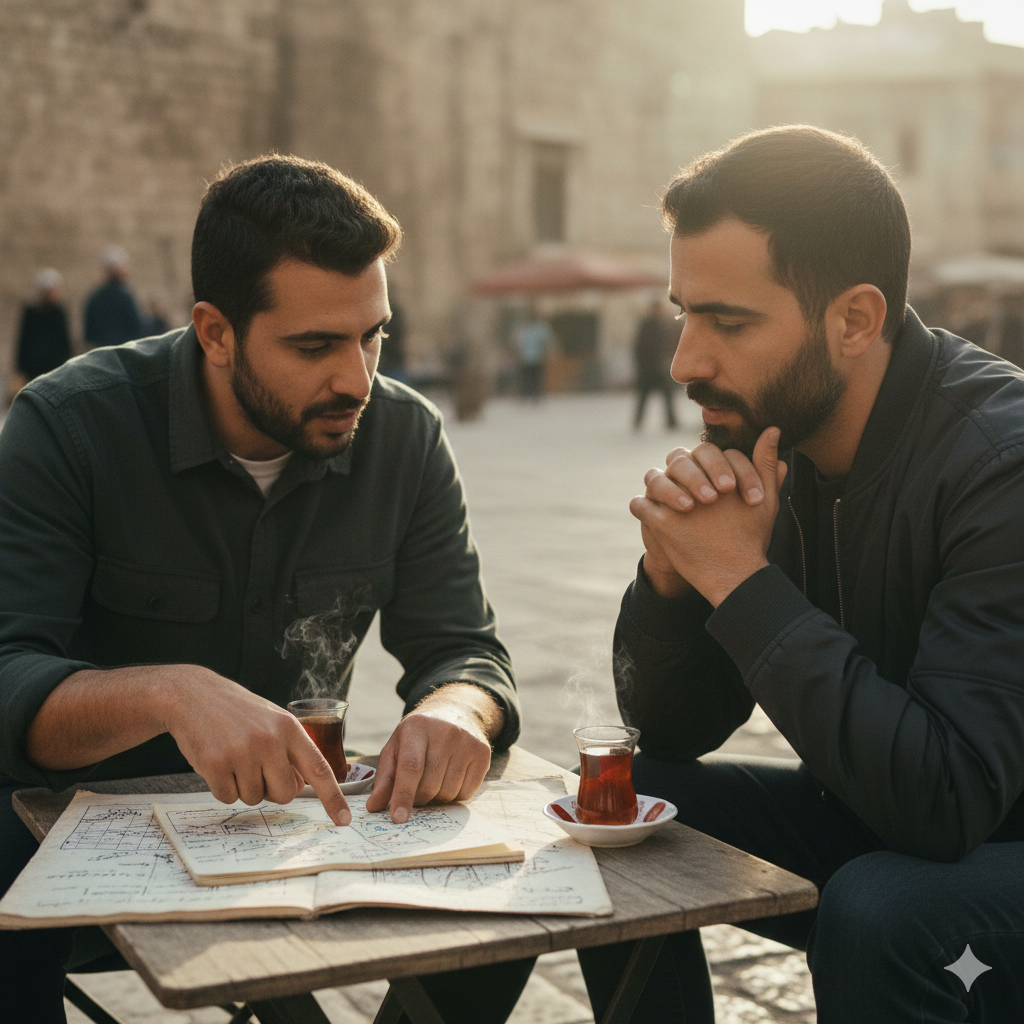
Scenario 3: Geographic Expansion (Abraham in Mecca)
The Setup: Your friend talks about the beauty of the Hajj and how Abraham and Ishmael built the Kaaba.
Friend: “The Jews just removed that part of the history.”
You: “But the Quran says it confirms what was already in the people’s hands. If the ‘Blueprint’ is missing the most important project in Abraham’s life and the coordinates are 800 miles off, then it isn't confirming the record—it’s changing it. Under Surah 4:82, can a ‘confirmation’ that changes the map still be considered divine?”
Remember the “Veteran’s Perspective.” In Iraq, I didn’t get angry when a report was wrong—I just marked it as “unreliable.” You can do the same:
If your friend gets upset or says you don't understand the language, use a Tactical Reset to bring it back to the paper.
“Allah knows the history better than the Bible, so if the Quran says it, then the Bible is what’s wrong.”
“That would be a fair point if the Quran didn’t claim to be a confirmation (Musaddiq) of the Torah. If I hire an inspector to ‘confirm’ my blueprint, but he tells me the kitchen belongs in the backyard, he’s not confirming my blueprint—he’s giving me a new one. If the Quran changes the details of stories it says it’s confirming, it fails its own test in Surah 4:82.”
In this Practicum, we are training Situational Awareness. You are learning to see the “Audit Openings” in normal conversation. Your “Decision Tree” always leads back to the same place: Does the “Confirmation” match the “Blueprint”? Practice these pivots until they feel natural. The mission depends on your ability to stay on the paper.