
In the military, we have a system called "IFF"—Identification Friend or Foe. It’s a series of codes that tell you exactly who is entering your airspace. If an aircraft sends a signal claiming to be a "Friendly Transport," but its flight signature and radar profile match an "Enemy Fighter," you don’t trust the signal—you trust the signature. A name can be faked, but a signature is almost impossible to forge.
When we audit the Quran’s claim that Muhammad was predicted in previous scriptures, we have to look at "Signal Recognition." The Quran claims to be a “Confirmation” of the Gospel, specifically claiming that Jesus predicted a messenger by name. But when we perform the Surah 4:82 Test on the “Comforter” in the Gospel of John, we find a “Signature Mismatch.” Today, we are auditing the identity of the Comforter.
The Claim
The Quran asserts that Jesus gave a specific mission briefing to the Israelites regarding a future messenger named Ahmad (a variant of Muhammad).
“...Jesus, the son of Mary, said, 'O children of Israel, indeed I am the messenger of Allah to you... bringing good tidings of a messenger to come after me, whose name is Ahmad.'”
The traditional claim is that the “Comforter” (Parakletos) promised by Jesus in the Gospel of John is this prophecy of Muhammad. For the Quran to be a “Confirmation,” the Personnel Signature of the Comforter must match the Personnel Record of Muhammad.
If the original "Blueprint" describes the Comforter as an eternal, invisible Spirit living inside 1st-century disciples, then a 7th-century "Confirmation" claiming he is a mortal, visible man born 600 years later is a personnel contradiction. The signals don't match the signature.
Evidence & Comparison
To perform the audit, we must look at the “Blueprint”—the actual words of Jesus recorded in the Gospel of John.
1. Duration Signature: “Abiding Forever”
Jesus describes the duration of the Comforter’s tour of duty:
“I will ask the Father, and He will give you another Helper, that He may be with you forever;”
Audit Point: Muhammad was a mortal man who lived for 62 years. He is not "with" the believers "forever" in a physical sense. The signature is an eternal presence; Muhammad is a mortal history.
2. Nature Signature: “Indwelling the Believers”
Jesus describes the location and nature of this Helper to his 1st-century disciples:
“...the Spirit of truth... you know Him because He abides with you and will be in you.”
Audit Point: Jesus says the world “cannot see” Him. Muhammad was not "in" the disciples, nor was he born for another 600 years. Muhammad was a highly visible, public figure. The signature is an invisible Spirit; Muhammad is a visible man.
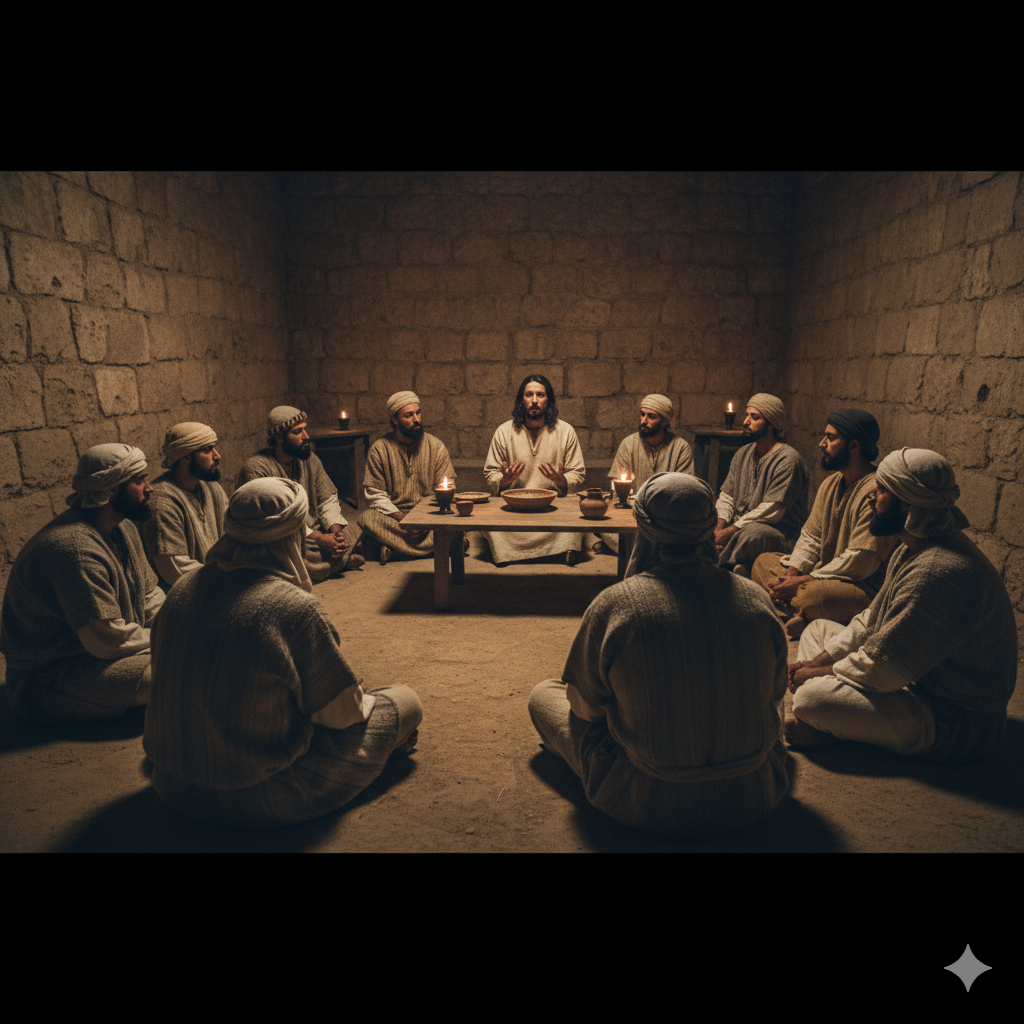
3. Identity Signature: “The Holy Spirit”
Jesus explicitly names the “Comforter,” leaving no room for guesswork in the manifest:
“But the Helper, the Holy Spirit, whom the Father will send in My name...”
Audit Point: The “Blueprint” identifies the Helper as a Spirit. The Quran identifies the messenger as a man named Ahmad. These are two different categories of being.
Approach this as a "Mission Briefing" inconsistency:
Do not let the conversation drift into theology (Phase 2). Stick to the Personnel Signature.
“The original word was ‘Periklytos’ (Praised One/Ahmad). Christians changed it to ‘Parakletos’ to hide the prophecy.”
“Even if you change the name, the description (the signature) still says he is an invisible Spirit who lives ‘in’ the disciples forever. Changing the name doesn't change the fact that the person described is not a mortal man. If the Quran says the ‘Praised One’ is a man, but the Gospel says he is a Spirit, the contradiction remains. Why doesn't the ‘Confirmation’ match the ‘Blueprint’s’ signature?”
We are identifying Contextual Narrative Mismatch. This occurs when a later text “cherry-picks” a title but ignores the surrounding data that defines it. By highlighting that the Comforter is “eternal” and “indwelling,” you show that the “Ahmad” claim is a 7th-century insertion that ignores the 1st-century “Personnel Record.”