
In war, intelligence is the lifeline. Before any movement, you have to perform an "Intelligence Audit." You take a new report from a source and lay it directly over an existing "Blueprint"—the maps, the previous situation reports, and the historical data of the area. If the new report claimed there was a bridge over a dry wadi (seasonal riverbed) where current maps and the previous five years of intelligence showed only sand, you don't just shrug it off. You flag it. You audit it. If the new intel doesn't match the established Blueprint, the report is compromised.
We aren't here to shout or trade insults with Muslims. This is what we're instructed to do in 2nd Timothy 2:
"The Lord's bond-servant must not be quarrelsome, but be kind to all, skillful in teaching, patient when wronged, with gentleness correcting those who are in opposition, if perhaps God may grant them repentance leading to the knowledge of the truth, and they may come to their senses and escape from the snare of the devil, having been held captive by him to do his will."
So, we are here to sit down with historical documents and perform a cold, hard audit. The Quran makes for us a massive, high-stakes challenge in Surah 4:82. It says it is a divine "confirmation" of the records that came before it and that if it wasn't from their version of God, which they claim is the same God of Abraham, Isaac and Jacob, then we'd find a lot of contradictions. Challenge accepted. Today, we begin the Surah 4:82 Test. We are going to see if the "Update" actually matches the "Blueprint."
The Claim
The Quran identifies itself using the term Musaddiq, which means "Confirmer." It claims to be the final piece of a single, consistent puzzle. It doesn't claim to be a brand-new religion that replaces everything; it claims to be a verification of the Torah and the Gospel.
"And We have revealed to you, [O Muhammad], the Book in truth, confirming that which preceded it of the Scripture and as a criterion over it…"
To prove this divine origin, the Quran offers its own audit standard—the Surah 4:82 Test.
"Then do they not reflect upon the Qur'an? If it had been from [any] other than Allah, they would have found within it much contradiction."
Under this test, a divine book must be consistent. If it claims to confirm the previous scriptures but contradicts their names, dates, geography, and family trees, it fails its own test.
Evidence & Comparison
To perform an audit, you need the original data. In many conversations, you'll hear that the "Blueprint" (the Bible) was changed or corrupted long ago. But the paper trail tells a different story.
1. The Dead Sea Scrolls — The Blueprint's Stability
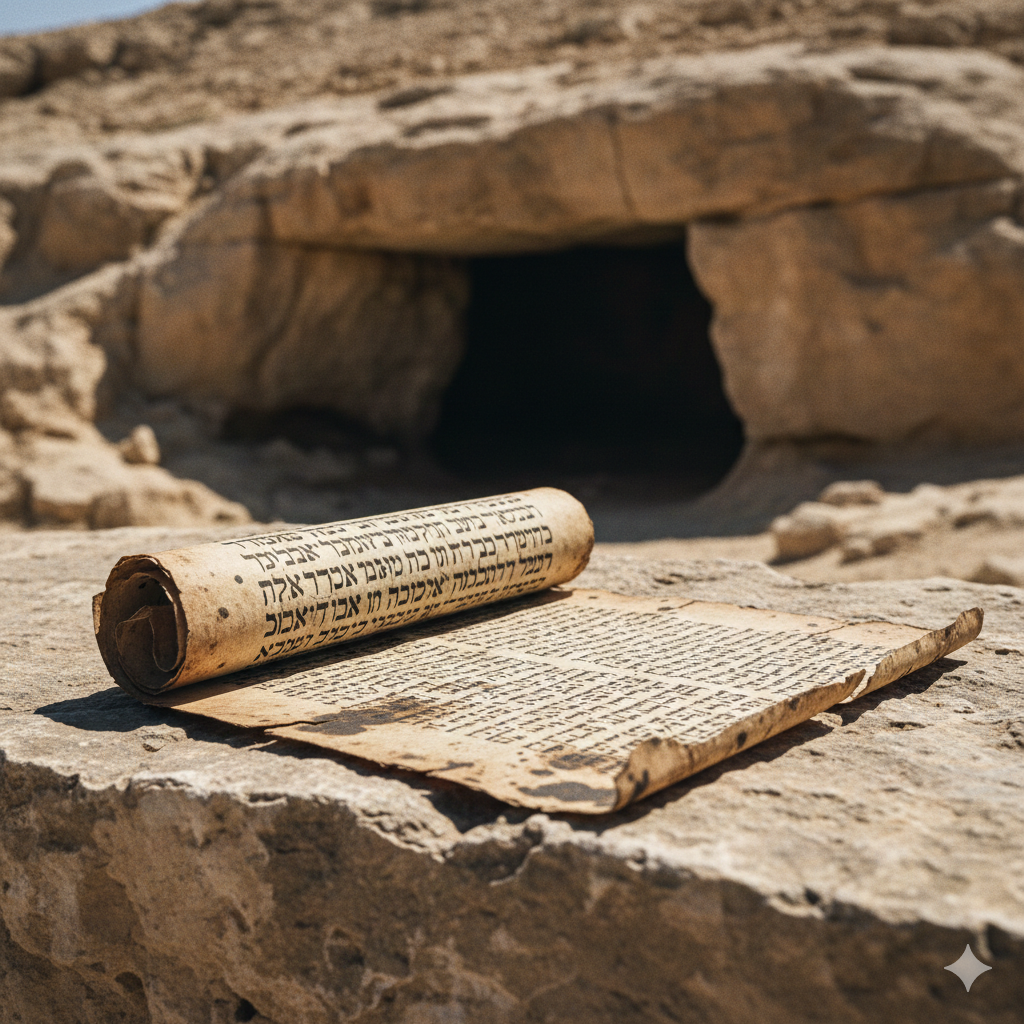
In the military, they look for "Primary Source" verification. In 1947, a massive cache of Hebrew manuscripts was found in the caves of Qumran—the Dead Sea Scrolls. These include nearly every book of the Torah and the Prophets, dating from roughly 250 BC to 68 AD.
When we compare these ancient "Blueprints" to the Bibles we have today, the consistency is staggering. The names, the lineages, and the historical narratives are the same. This means that for nearly 1,000 years before the Quran was even a thought, the record was already locked in stone. The "Blueprint" didn't change.
2. The Instructions of the Quran
The Quran actually acknowledges the integrity of the scriptures that were in the hands of the people in the 7th century.
"And let the People of the Gospel judge by what Allah has revealed therein. And whoever does not judge by what Allah has revealed - then it is those who are the defiantly disobedient."
If the Gospel had been "corrupted" by the 7th century, why would God command Christians to "judge by it"? You can't judge by a corrupted lie. This verse proves the Quran views the 7th-century Blueprint as valid. If that valid Blueprint contradicts the Quranic "Confirmation," the audit identifies a human error in the later text.
In Phase 1, we are in Demolition mode. Our mission is strictly limited to narrative consistency. Do NOT bring up the Trinity, the deity of Christ, or the Gospel message yet. If you jump to "Jesus is God," you are moving into Phase 2 "Restoration."
If you do that now, you will lose the conversation to an impasse. Why? Because your friend will pivot to a theological argument they've been trained to win. Keep them on the paper. Stay on the history. If the Quran can't get the "Blueprint" details right (names, dates, places), it doesn't matter what its theology says. Secure the audit first.
When you're talking to a Muslim friend, approach it like two investigators looking at a cold case. You might say:
If your friend says, "The Bible was corrupted after the Quran was revealed," use the Manuscript Anchor.
"The Jews and Christians hid the 'real' books and changed the ones they had."
"But Surah 5:47 tells Christians to judge by the Gospel they have. If they were holding a fake, God wouldn't tell them to judge by it. He would tell them it's gone. Because He told them to use it, the Quran validates the book they were holding in the 7th century. My audit is simply comparing that 7th-century book to the Quran. If the details don't match, the 'Confirmation' claim fails the Surah 4:82 Test."
In this Phase 1 lesson, we are establishing the Law of Non-Contradiction. We are showing that the Quran's claim to be a "Confirmer" (Musaddiq) is a testable, historical claim. By using the Dead Sea Scrolls as a physical anchor, you remove the "corruption" excuse and force the conversation back onto the narrative data. You are training your friend to look at the paper.