
In the military, there's a name for the way information degrades as it moves through a unit without being written down: “Rumor Control” or “Scuttlebutt.” If you're out on a patrol and hear a story about a localized skirmish three miles away. By the time that story reaches the chow hall that evening, the three insurgents become thirty, the small-arms fire becmes an RPG barrage, and the location shifts a few blocks over.
Without the “Mission Log”—the written, timestamped record—the story began to blend with other stories people had heard before. It became a “Mixed Story.” When we perform the Surah 4:82 Test, we aren’t just looking for typos; we are looking for evidence of “Scuttlebutt.” Today, we’re learning about the Mixed Story Framework—the primary way the Quranic “Confirmation” drifts from the historical “Blueprint.”
The Claim
The Quran claims to be a divine “Confirmation” (Musaddiq) of the previous scriptures.
"And We have revealed to you, [O Muhammad], the Book in truth, confirming that which preceded it of the Scripture and as a criterion over it…"
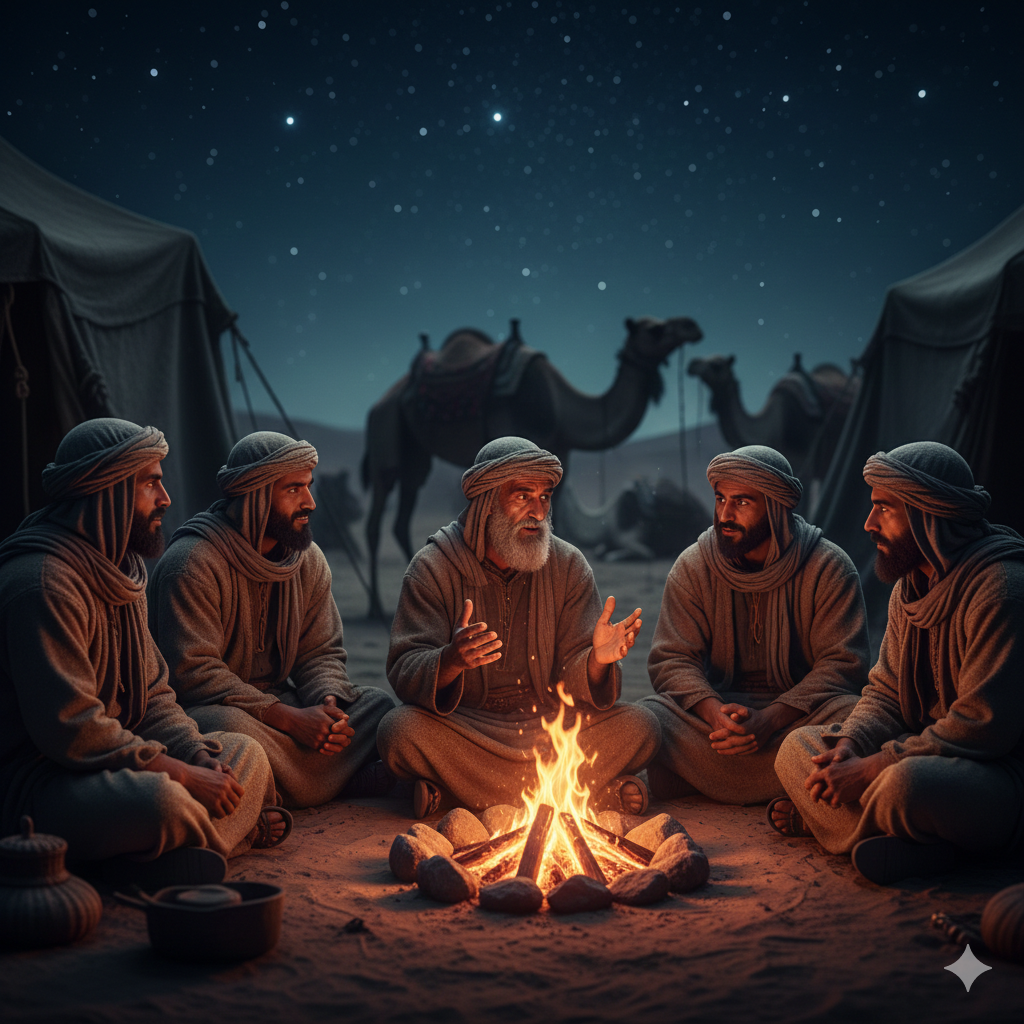
However, the Quran’s own test in Surah An-Nisa 4:82 says that a divine book must be free of “much contradiction.” The Mixed Story Framework is an audit tool we use to explain why these contradictions occur. In the 7th-century Near East, most people relied on Oral Tradition—stories told around campfires or in marketplaces. Over centuries, these stories often “blended” together. If the Quran incorporates these “Mixed Stories,” it fails the audit of being a precise, divine confirmation.
If the Quran’s "Update" reflects popular 7th-century oral rumors instead of the original "Mission Log," it fails the Surah 4:82 Test. If God is the author of both records, He would not get His own history mixed up with the scuttlebutt of the time.
Evidence & Comparison
To understand the Mixed Story Framework, we have to look at the difference between a Static Record and a Fluid Story.
1. The Static Blueprint (The Mission Log)
Physical evidence like the Dead Sea Scrolls prove the written “Blueprint” remained unchanged for over 1,000 years before the Quran. This is the “Mission Log.” It anchors the details: Name A did Action B at Location C.
2. The Fluid Story (The 7th-Century Scuttlebutt)
In an oral culture, people remember “Signature Beats.” For example, a prophet's army being tested by how they drink from a river. In the Mixed Story Framework, we see the Quran often remembers the “Beat” but gets the “Personnel” wrong. It takes the “River Test” belonging to Gideon in the Blueprint and assigns it to King Saul in the Confirmation. This is a classic “Scuttlebutt” error—remembering the detail but swapping the commanders.
3. The Result of the Audit
Under the Surah 4:82 Test, these blends are identified as contradictions. If the Mission Log says “Gideon” and the Update says “Saul,” the update isn’t “confirming” the log; it’s reflecting a corrupted oral rumor. If God is the author, the records would match.
We all have “Mixed Stories” in our own families. You might have a legend about Great-Grandpa Joe winning a medal in WWII, but when you look at the official records, you find out it was actually his brother, Sam, in the Korean War. The story “blended” over holiday dinners. You can say:
When you identify a story that seems “off,” don’t call it a “lie.” Call it a “Mixed Story.” It’s a softer, more inquisitive way to raise the issue.
“The Quran is the ‘Criterion’ (Furqan). It is the correct version, and it’s the earlier books that got the stories mixed up over time.”
“That’s a common perspective. But the problem is the paper trail. We have the Dead Sea Scrolls from 2,000 years ago that match our modern Torah perfectly. That means the ‘Blueprint’ has been static since long before the Quran was revealed. The Quran, however, reflects the specific ‘blends’ that were popular in 7th-century oral folklore. If the ‘Confirmation’ matches rumors but contradicts the written records from the 1st century, the audit points toward a human source.”
In this lesson, we are introducing the Concept of Narrative Erosion. We are helping the student see that the Quran’s “errors” follow a specific pattern of oral storytelling. By identifying these “Mixed Stories,” you show that the Quran functions exactly like a human book of its time, rather than a divine “Guardian” of historical fact.