
In the military, we rely heavily on “Subject Matter Experts” (SMEs). But an expert is only as good as their data. If an intel analyst looks at a signature and says, “This is exactly like the signature we saw in 1991,” but the coordinates and the physical behavior are all different, that expert has made a “False Equivalence.” They’ve let their desire to find a pattern override the actual evidence on the paper.
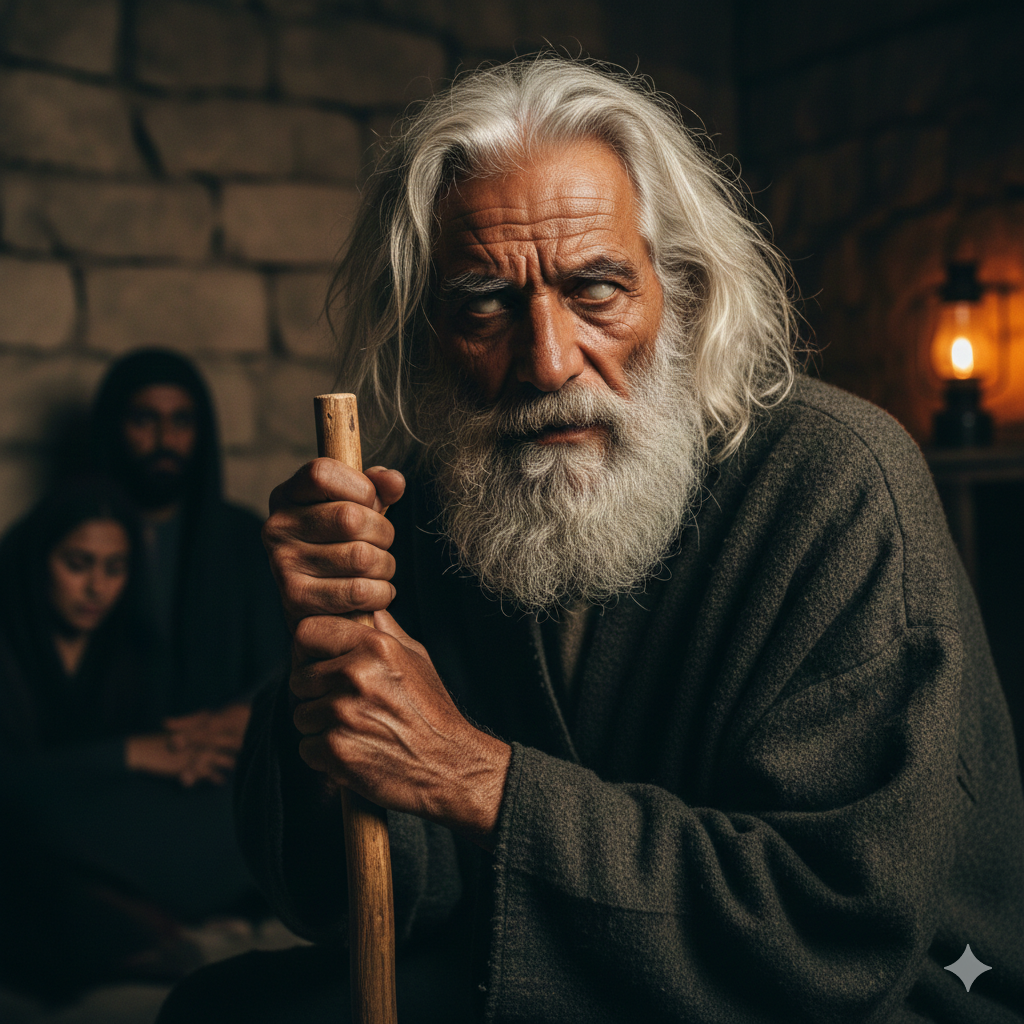
When we audit the “expert testimony” that launched the Islamic claim, we have to look at Waraqa ibn Nawfal. He is the bridge—the man who told Muhammad that his experience in the cave was the same thing that happened to Moses. But when we perform the Surah 4:82 Test, we find a massive “Analogy Problem.” Waraqa’s expert opinion doesn’t match the historical signatures.
The Claim
Central to the historical narrative of the first revelation is the testimony of Waraqa ibn Nawfal, a relative who “used to read the Gospels in Arabic.” When Muhammad fled the cave in terror, Waraqa famously told him:
“This is the same Namus [the Angel of Revelation/The Law] who was sent to Moses.”
This is the foundational “expert witness” statement. It claims that the experience in the Cave of Hira and the experience at the Burning Bush are functionally identical—the same “signature.”
Under the Surah 4:82 Test, if the “Confirmation” (Muhammad’s call) relies on an analogy that contradicts the “Blueprint” (Moses’ call), the confirmation fails. The "Namus" who spoke to Moses identified himself immediately and left the prophet in peace; the entity in the cave remained anonymous and left the recipient in terror.
Evidence & Comparison
To perform the audit, we must check if the signature of the "Namus" of Moses matches the entity in the cave.
1. The “Namus” of the Blueprint (Moses)
In the Torah, when the Angel of the Lord appears to Moses, the signature is characterized by Direct Identification and Peaceful Authority.
“...God called to him from the midst of the bush and said, ‘Moses, Moses!’ And he said, ‘Here I am.’”
God calls Moses by name. He identifies Himself immediately as the God of the Patriarchs. There is no physical struggle and no confusion about the source.
2. The “Namus” of the Cave (Muhammad)
The signature of the encounter in the cave was characterized by Anonymity and Physical Trauma.
- The entity does not give a name or identify as the God of Abraham.
- It seizes Muhammad and squeezes him until he cannot breathe, three times.
- Muhammad leaves fearing he is possessed by a jinni and contemplates suicide (Sahih al-Bukhari 6982).
3. The Breakdown of the Analogy
Waraqa’s analogy claims these two events are the same. But the details are opposites. The "Namus" who came to Moses never used physical force and never left a prophet in a state of suicidal confusion. Waraqa gave an expert opinion, but he ignored the data in the "Blueprint."
Discuss "Trusted Advice" with your friend:
If your friend says, “Waraqa recognized the truth,” focus on the Standard of Evidence.
“Waraqa was the only person qualified to judge. The fact that he accepted it proves it was true.”
“If Waraqa knew the Torah, he would have known that God always identifies Himself to prevent the kind of terror Muhammad felt. By calling it the ‘same,’ Waraqa ignored the very record he claimed to know. The Surah 4:82 Test asks: is the record consistent? Waraqa’s analogy is a human attempt to force a connection where the details show a contradiction.”
We are identifying Analogy Breakdown. This occurs when a later narrative uses a “character witness” to validate a claim, but that witness’s statement is contradicted by the historical “Blueprint.” The foundational “authentication” of Muhammad was based on a false equivalence, not a divine confirmation. The “Expert Witness” has failed the audit.