
In the military, we have a clear "Chain of Command" and something called "Command Authority." You don’t just walk into a unit and claim to be the new Commanding Officer because you had a private dream about it. You arrive with signed orders from a higher headquarters, and you have the rank on your chest for everyone to see. Without that public, verifiable authorization, no one follows your lead. It’s a matter of security.
When we look at the "orders" given to the prophets, we see a consistent "Standard Operating Procedure" (SOP). The Quran claims to be a “confirmation” of the previous scriptures, but when we audit how a prophet is commissioned, we find a major shift in the “paper trail.” Today, we are auditing the difference between the Private Validation of Muhammad and the Public Commission of the earlier prophets. Under the Surah 4:82 Test, does this change in the authentication process count as a contradiction?
The Claim
The Quran asserts that it is consistent with the revelations that came before it. Surah An-Nisa 4:82 challenges us to find a contradiction as proof of a non-divine origin.
“Then do they not reflect upon the Qur’an? If it had been from [any] other than Allah, they would have found within it much contradiction.”
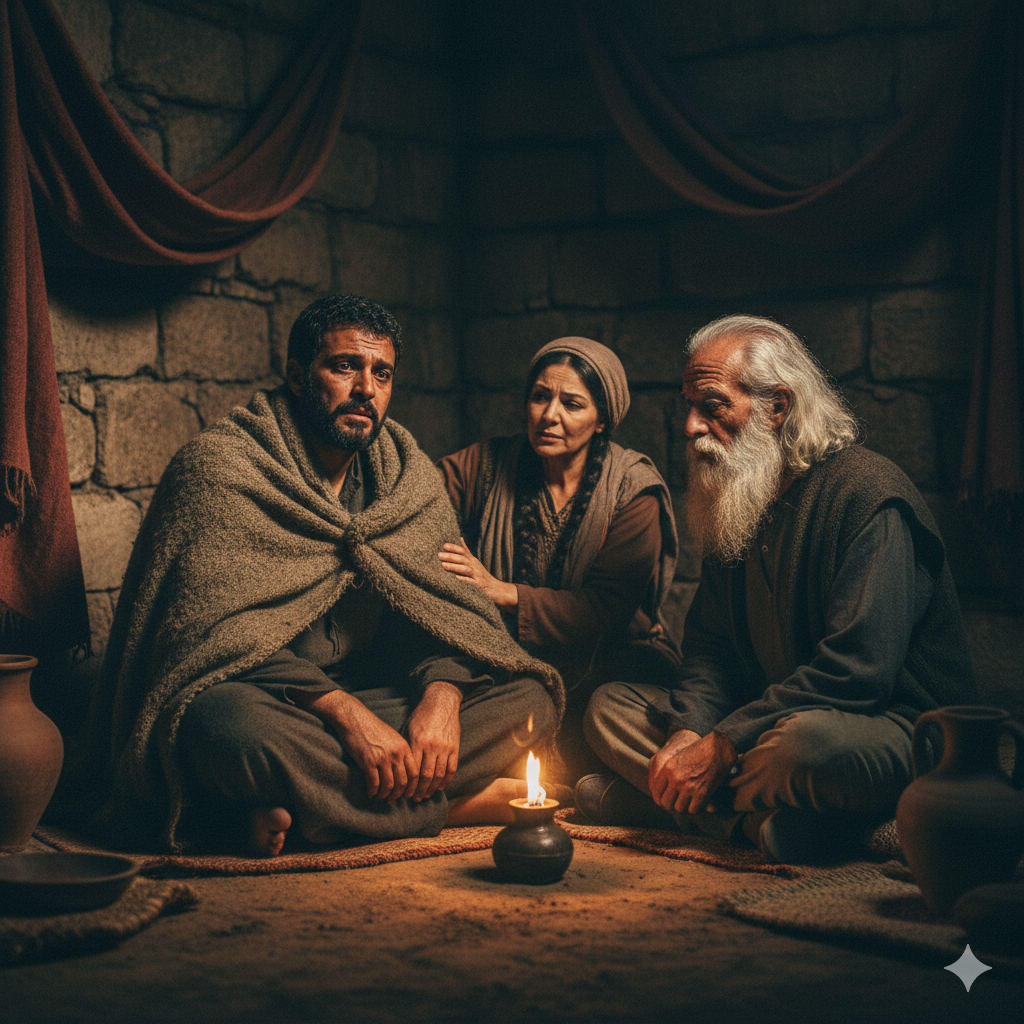
In the case of Muhammad, his prophetic commission was initially a deeply private and ambiguous experience. According to the Quranic record and the primary historical traditions (Sira), Muhammad was not given public, miraculous signs to prove his authority to his people during the initial years. Instead, he sought private validation from human sources—his wife Khadija and her cousin Waraqa ibn Nawfal—to determine if his experience was divine or demonic.
A "Confirmation" must follow the "SOP of Authentication" established in the "Blueprint." If the God of the Torah established Public Commission with physical miracles as the standard for 1,500 years, then a sudden shift to Private Validation through a family member's opinion creates a structural contradiction in the record.
Evidence & Comparison
To perform the Surah 4:82 Test, we must look at the “Blueprint” of prophetic commission established in the Torah.
1. The Blueprint: Public Commission (Moses)
When God calls a prophet in the “Blueprint,” He doesn't just give them a private message; He gives them objective, verifiable signs designed to authenticate them to the public immediately.
“Then Moses said, ‘What if they will not believe me or listen to what I say?...’ The Lord said to him... ‘Throw it on the ground.’ So he threw it on the ground, and it became a serpent... ‘that they may believe that the Lord, the God of their fathers... has appeared to you.’”
- Objective Signs: Moses is given the staff-to-serpent sign and the leprous-hand sign specifically to answer the question: “How will they know?”
- Direct Authentication: God Himself provides the proof. Moses does not need to ask a priest or a family member to “validate” his calling.
2. The Conflict: Private Validation (Muhammad)
In contrast, the Quranic narrative acknowledges that Muhammad’s people asked for similar signs, but they were not granted. The Quran explains this by saying previous generations ignored miracles anyway.
“And nothing has prevented Us from sending signs except that the former peoples denied them...”
Because there were no objective signs at the start, Muhammad’s authentication was entirely private. He had to rely on Waraqa (a human student of previous scriptures) to tell him, “This is the same Namus (Angel/Law) that came to Moses.”
3. The Breakdown
If the Quran is a “confirmation,” why did the God who considered public signs necessary for Moses suddenly decide they were unnecessary for Muhammad? In military terms, if the SOP for authorizing a commander changes from "signed orders" to "a family member’s opinion," the security of the command is lost.
Talk about "Confidence in Leadership" with your friend:
If your friend says, “The Quran itself is the miracle,” stay focused on the Pattern.
“People in the past saw miracles and still didn't believe, so God stopped sending them. The Quran is a miracle for the intellect.”
“The Surah 4:82 Test isn't about what's ‘better’—it's about whether the text is consistent. If the God of the Torah established a ‘Public Commission’ SOP for 1,500 years, and then the ‘Confirmation’ says He stopped because it didn't work, that's a change in God's strategy and character. It's a contradiction of the established record. If the ‘orders’ look different, how can we be sure they came from the same Headquarters?”
In Phase 1, we are identifying Functional Authentication Divergence. This happens when a later movement lacks the historical "credentials" (miracles) of the previous one and must create a new category to justify that lack. By highlighting that Muhammad relied on Private Human Validation while Moses relied on Public Divine Commission, you show that the "paper trail" of prophetic authority has been broken.